 Anqulas
Somebody said yes.
Nobody wrote it down.
One login where an approval carries a name, a date and a price — and nothing can quietly change afterwards.
Nothing is behind a booking form. Open it, click anything, then decide.
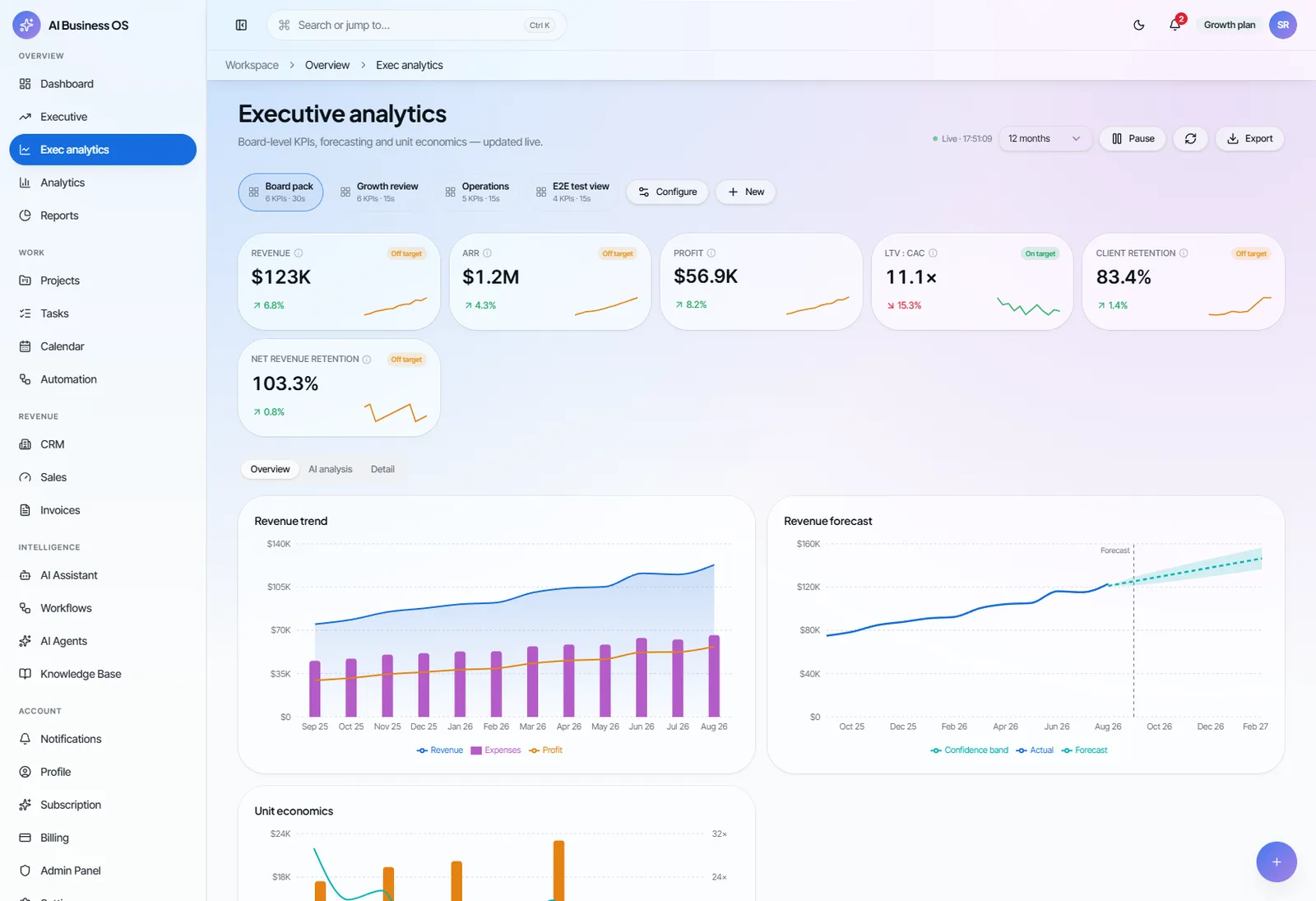
Their half, and your half.
These are the ones that change your week. The rest are there when you want them and quiet when you don't.
 Their side — what the client sees
-
Clients get their own front door
They sign in and see their projects, their files, their invoices — and nothing belonging to anyone else.
-
Decisions with a name on them
Work goes out as a decision, not an attachment. Approve, or request changes — recorded, dated, signed. “I never approved that” stops being a conversation.
-
Four roles, so the right person decides
Owner signs and pays. Manager approves. Team member uploads. Viewer looks. Set per client in a minute — the wrong person doesn’t get the button.
 Your side — what you get
-
Everything live, and whose turn it is
Projects, tasks, calendar and pipeline in one place. What’s moving, what’s stuck, and who it’s sitting with. Usually them.
-
Invoices that know what they’re for
Raise it against the work, send it, see who hasn’t paid — without opening anything else. It bills. It isn’t your accountant.
-
Your name on it. Not ours.
Your logo, your colours, your domain. Nothing on the screen mentions us. As far as they know, you built it.
-
Your data leaves whenever you like
Backed up nightly, and read back to check it restores — an unread backup is a hope. Any records export to a plain file. Nothing holds you hostage.
Why "I never approved that"
stops working.
Anyone can promise a record. These are the three things that make it hold up months later, when the job is finished and the argument is about who said what.
The log refuses to be edited
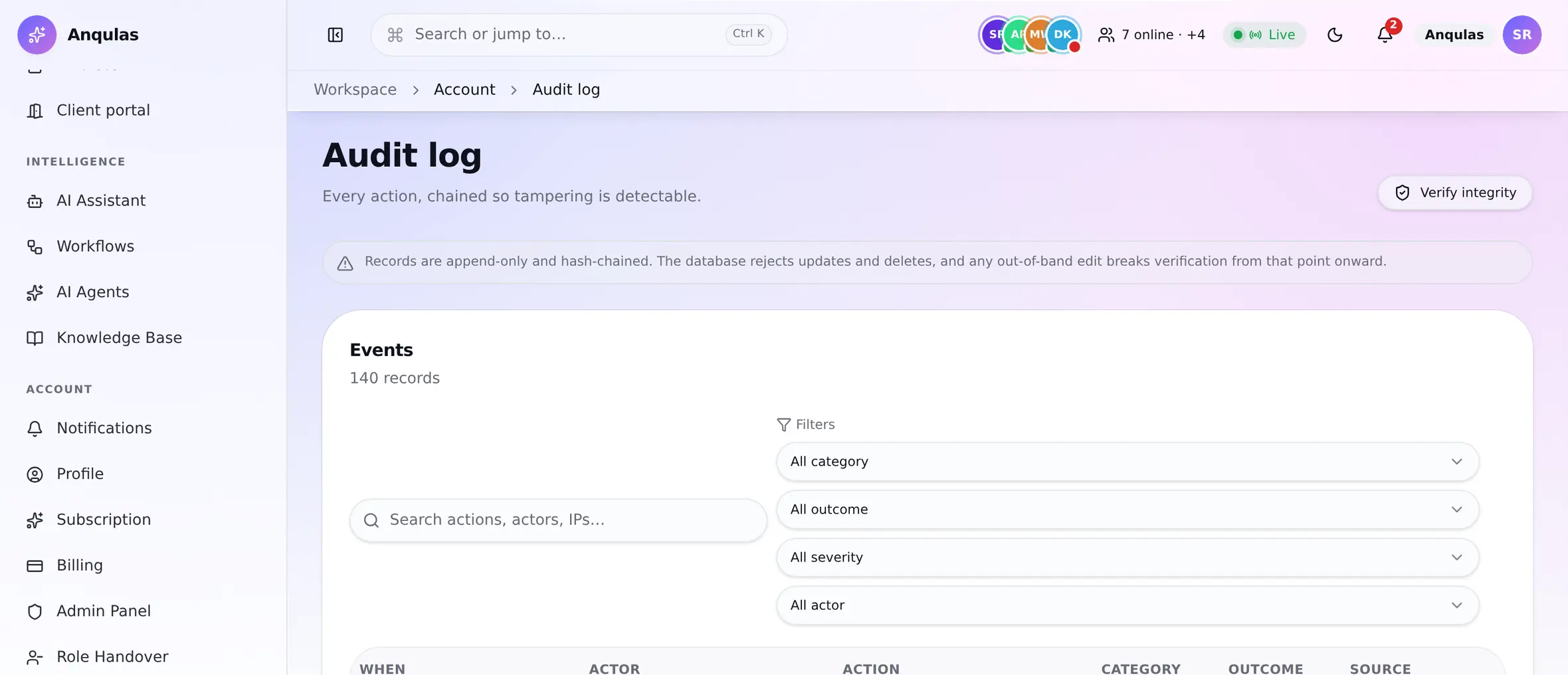
Every action is written append-only and hash-chained: each record's hash covers its content and links to the one before it. The database rejects updates and deletes outright, and an edit made around it breaks verification from that point onward. There is a button that checks the whole chain.
A signature captures the document, not a tick
Signing a contract records the name, the moment, the IP address it came from, and a hash of that exact version of the document. Change a word afterwards and the hash no longer matches what was signed — which is the difference between a signature and a checkbox.
Approvals supersede. They never overwrite
When something is re-agreed, the new approval points back at the one it replaces and both stay. So the question at final account isn't "what does the system say now" — it's "show me the sequence", and the sequence is there with a name and a price against each step.
No form. No call.
No trial to cancel.
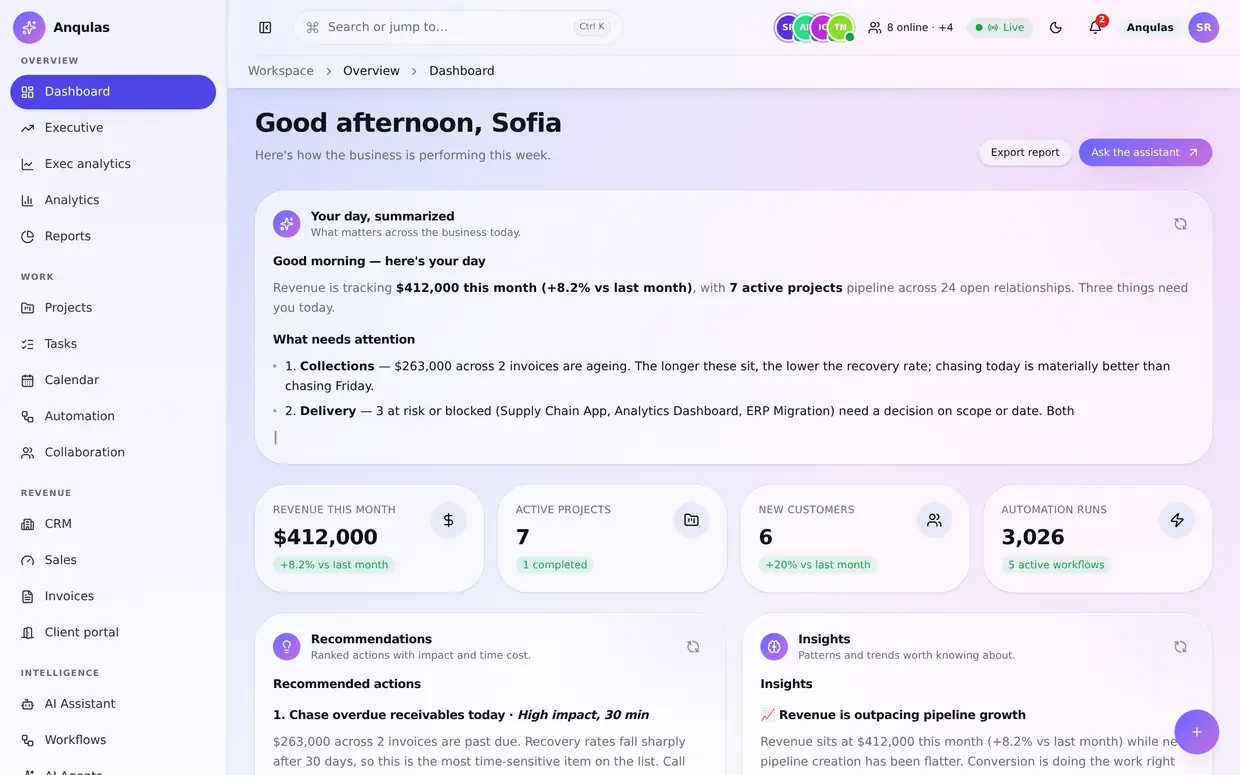
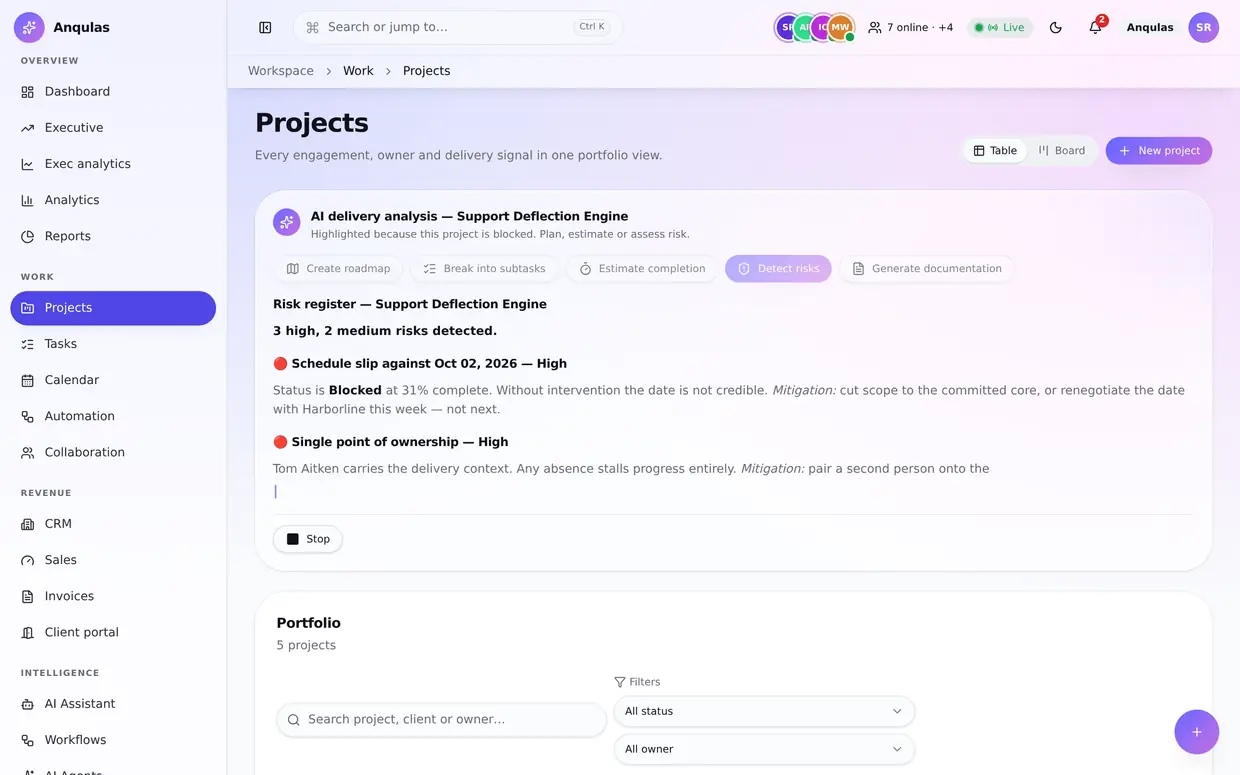
The demo login and password are printed on the sign-in page. Nothing to fill in, nobody to talk to, and no card. These are three of the fifty-three screens, photographed from the thing itself.
Live by Friday.
Not a pilot, not a discovery phase. Your real clients, your real invoices, your team logged in.
-
Mon
We talk for an hour
Your stages, your roles, who is allowed to approve what. Bring a job that went sideways — everyone has one.
-
Tue
Your copy goes up
Your instance, your subdomain, your logo and colours — on accounts opened in your name.
-
Wed
Your real work goes in
Live clients, live jobs, the invoices you’re still chasing. No sample data.
-
Thu
Your team gets logins
An hour together. If it needs a training course, it’s built wrong.
-
Fri
You let the clients in
Two or three to start. The first decision that lands there instead of your inbox pays for the week.
Your logo. Your domain.
Your data.
The hosting and database accounts are opened in your name, on your card, on day one. Nothing on your clients' screen mentions me. If you stop working with me on a Wednesday, nothing switches off — you keep the system, the data and the logins.
While there is nothing to show but the software. Your price locked for good; in exchange, honest feedback and your name once it works.
The same week's work, once the three founding slots are gone. Hosting accounts opened in your name, written handover runbook.
A support agreement, not a licence. Cancel with 30 days' notice and nothing switches off. Plenty of people take the runbook and never need it.
No per-seat pricing, no AI credits, no tier that unlocks the thing you actually needed. Unlimited people and unlimited client logins on all of them.
Free, and nothing
to fill in.
Three pages that ask for no address and sell nothing. They are here because the problem underneath this software is worth understanding whether or not you ever buy it — and because the trade has its own words for it, which are better than mine.

Let's talk
Questions about the demo, an install for your own team, or the price — write and you'll get a reply from the person who built it, not a sales team. There isn't one.
- Emailcontact@anqulas.com
- RepliesSame working day, Monday to Friday
- WhereIndia — working with clients worldwide