I build the tool that answers a compliance question — and the video that sells it.
Most compliance content is a PDF nobody reads. I build browser-based tools that take a business's own numbers and tell them where they stand, then produce the explainer video, the landing page and the search content that bring buyers to it. One person, start to published.
What I actually deliver
Any one of these on its own, or the whole chain.
Interactive decision tools
Self-contained HTML. Runs in the browser, no server, no data leaves the user's device — which matters when the input is commercially sensitive.
Explainer video
Recorded against the live product, not mockups. Narration, captions, thumbnail, chapters. Published and packaged for YouTube.
Landing page & search content
Sales page plus the long-tail guide pages that rank. Sitemap, schema, canonicals, Search Console setup.
Source-checked research
Every claim tiered: regulator's own wording, multiple practitioners, or unverified. Anything I can't source doesn't ship.
Case study — Amazon seller deactivation
Built and published in one week, solo.
The problem
An Amazon seller whose account is deactivated has two realistic options: pay a consultant $1,495–$2,500, or guess. Amazon's own notice commonly states that permanent deactivation follows after two unsuccessful appeals — so a bad first attempt is expensive in a way most sellers don't realise.
What I built
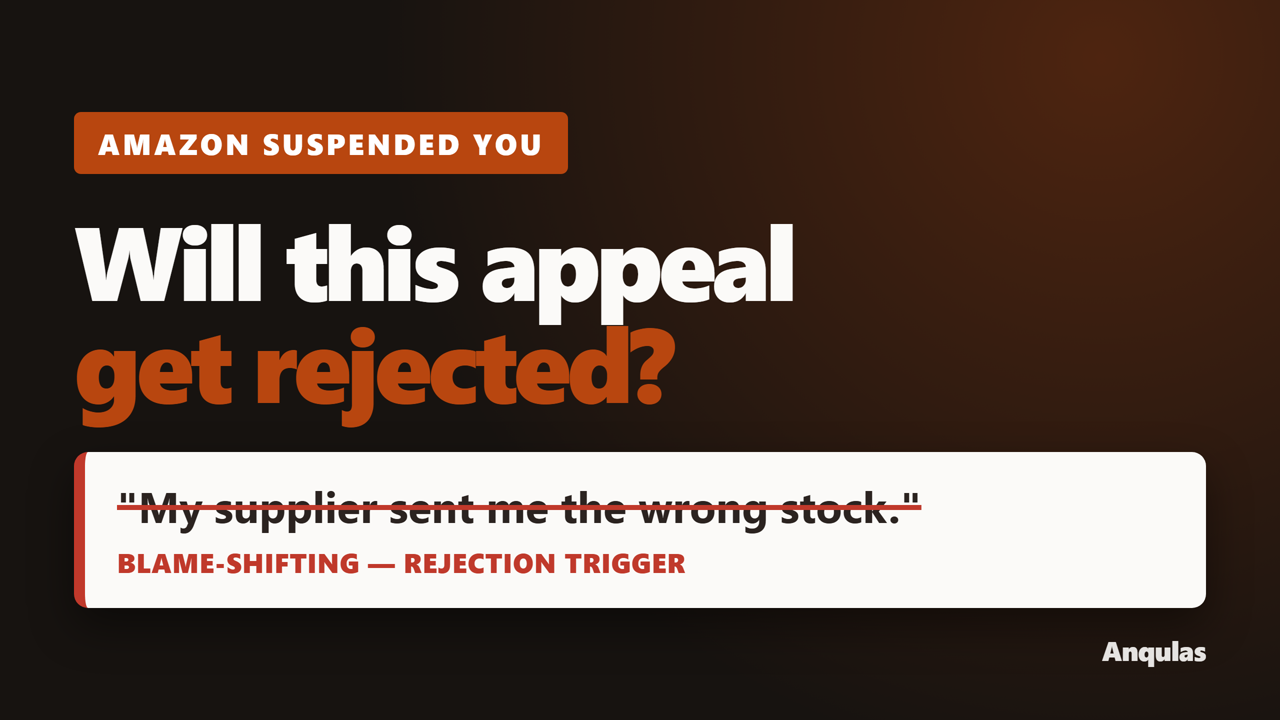
- A Plan of Action builder covering 15 deactivation reasons, each with its own evidence list, that checks the seller's draft against 9 language rules — blame-shifting, pleading, future tense where past tense is required, unverifiable absolutes.
- Four supporting tools — a first-48-hours checklist that persists locally, worked examples shown weak and strong, and a 90-day held-funds calculator.
- Seven search-targeted guide pages, sitemap, robots, schema, Search Console verification.
- An 8-minute explainer video recorded against the live tool, with synthetic narration, hand-timed captions, chapters, a custom thumbnail and a 9:16 short.
A second domain, same method
European Accessibility Act — Annex VI workbook
A free browser tool that walks a business through the disproportionate-burden assessment the EAA requires, producing a saveable record. It implements the micro-enterprise test correctly — the staff headcount and the turnover-or-balance-sheet limb, with the product-versus-service distinction that determines whether the exemption applies at all.
It is easy to get this test wrong. Getting it wrong in a tool creates liability for the user, which is the reason I read the directive text rather than the summaries.
How I work
Good fit / bad fit
Good fit
A rule your customers must comply with and don't understand. A calculation they currently do in a spreadsheet. A question your sales team answers by email fifty times a month.
Bad fit
Anything needing legal sign-off as advice — I build tools, I'm not a lawyer. Large multi-team applications. Ongoing retainer development.
Getting started
How a project usually runs
- A short call to work out what the tool has to decide. This is the part that determines everything else.
- A sketch of the decision logic, before any code. If it is wrong here, it is wrong everywhere.
- Build, review, deploy. Most tools take one to two weeks. The video, if you want one, adds a few days.
Most projects land between $1,500 and $3,000 depending on how complex the decision logic is. A tool plus explainer video and landing page runs higher. I will give you a fixed number once I know what it has to do — I do not quote before that, because the honest answer changes a lot.
Email: contact@anqulas.com
Tell me the rule and who has to comply with it. That is enough to start.